

Baby Essentials 101 MustHaves for New Parents Today
Updated on: 2025-12-15
This guide organizes what new parents truly need, separates myths from facts, and explains how to choose durable gear without overspending. It emphasizes safety, quality, and smart packing so daily routines feel simpler at home and on the go. You will find concise checklists, buying criteria, and answers to common questions, plus curated links to dependable items that streamline your nursery and travel setup.
- 1. Introduction
- 2. Myths vs. Facts: Baby Essentials
- 3. Personal Experience
- 4. Final Thoughts & Takeaways
- 5. What do I actually need ready for the first two weeks?
- 6. How many outfits and layers are practical for newborns?
- 7. Which diaper bag features make outings easier?
Introduction
Preparing for a new arrival can feel overwhelming. The marketplace is full of products, but not all contribute to daily comfort, safety, or ease. This article simplifies the landscape by mapping priorities, creating a lean checklist, and clarifying purchase criteria. It focuses on everyday scenarios—feeding, sleeping, changing, bathing, and travel—so each choice serves a clear purpose. The goal is to help you select baby essentials that are durable, easy to clean, and adaptable as your child grows.
The framework below is practical and brand-agnostic. It favors multipurpose designs, neutral colors for easy mixing, and compact storage. It also focuses on materials, stitching, zippers, and hardware, because construction quality determines longevity and resale value. Finally, it shows how a well-organized diaper backpack acts as a mobile command center, keeping wipes, bottles, and spare outfits clean and accessible, whether you are heading to the park or visiting family.
Myths vs. Facts: Baby Essentials
-
Myth: You need every trending gadget to be prepared.
Fact: A focused kit built around feeding, sleep, hygiene, clothing, and transport covers real daily needs. Add specialty gear only if a specific problem appears. -
Myth: More storage space means better organization.
Fact: Purposeful compartments and labeled pouches beat sheer size. Choose bags with structured pockets, quick-access wipes storage, and insulated bottle sleeves. -
Myth: Organic or premium automatically means safer.
Fact: Safety comes from compliant design, proper fit, and clear care instructions. Review seams, closures, ventilation, and washability along with material claims. -
Myth: You must buy duplicates of everything.
Fact: Keep backups for items that get soiled quickly—bodysuits, burp cloths, and socks. For big-ticket gear, buy once, choose well, and maintain it. -
Myth: Travel requires a second set of nursery gear.
Fact: A well-equipped diaper backpack with a changing pad, wipes, zipper bags, and pre-measured feeding supplies replaces bulky extras when out of the house. -
Myth: Monitors, warmers, and specialized devices are core needs.
Fact: Consider them optional conveniences. Start with a reliable feeding plan, safe sleep environment, and predictable routine. -
Myth: The cheapest bag is fine because you will replace it soon.
Fact: Construction quality—stitch density, reinforced straps, YKK-style zippers, and wipeable interiors—prevents early failure and protects contents from spills. -
Myth: Style and function rarely coexist.
Fact: Modern designs offer both. A sleek backpack can include structured compartments, insulated pockets, and a foldout pad without looking bulky.
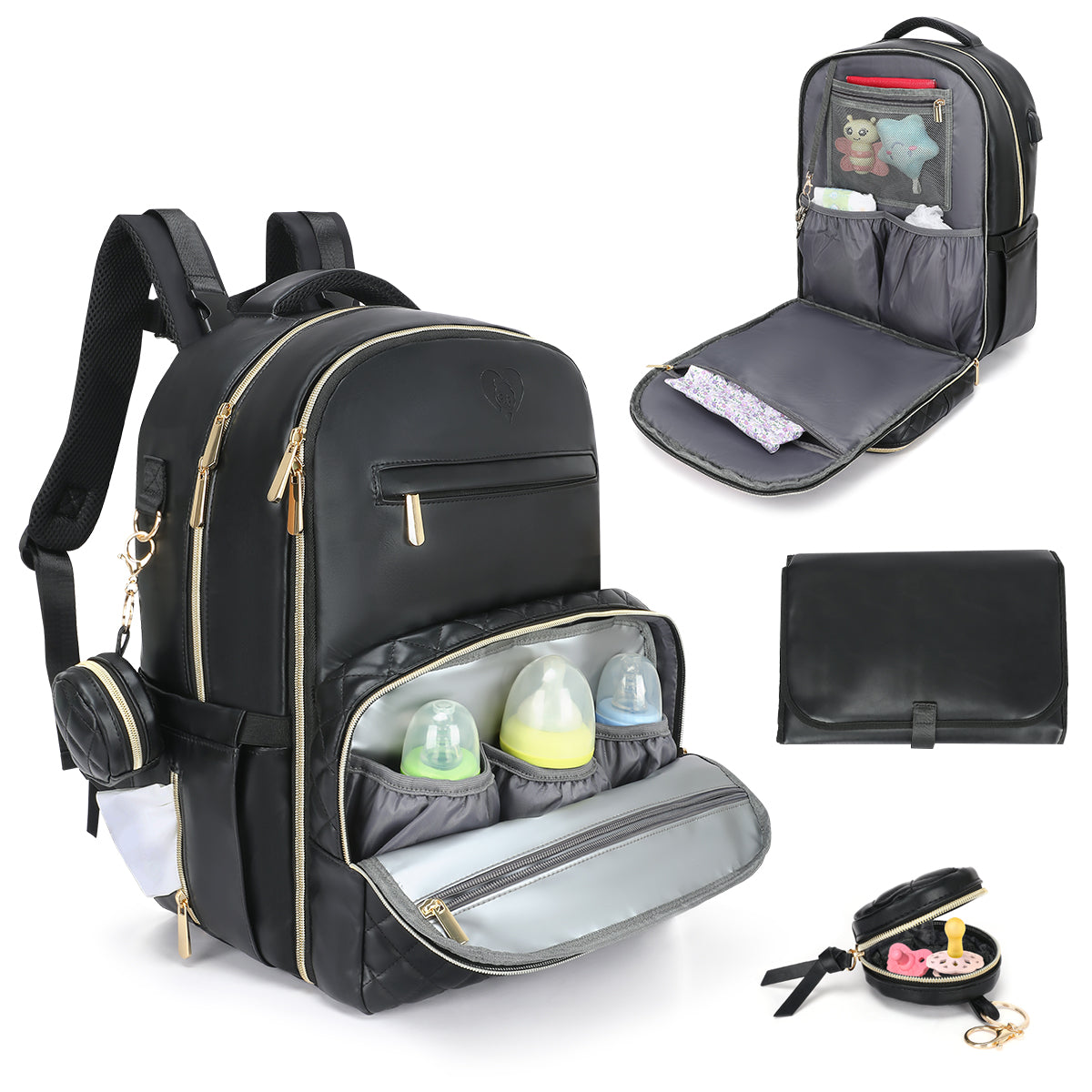
When selecting an on-the-go organizer, look for durability, easy-clean interiors, and modular packing. For example, an eco-friendly diaper bag with changing station limits what you need to carry by integrating essential features in a single, compact form.
Personal Experience
In consulting parents on nursery setup and travel readiness, I see a consistent pattern: initial overbuying followed by rapid simplification. Families often start with shelves full of single-use items. After a few weeks, they gravitate toward a stable core: soft zip-up sleepers, absorbent burp cloths, a handful of swaddles, a reliable carrier, and a structured backpack that keeps everything clean and in reach. The “core kit” becomes second nature because it aligns with daily routines and reduces decision fatigue.
One parent I worked with reorganized a cluttered stroller basket and an unstructured tote into a streamlined backpack system. Pouches labeled “diapering,” “feeding,” and “spares” replaced loose items. Leak-prone creams moved into small screw-top containers. Two compact muslin cloths replaced thick towels. After the change, packing took five minutes and nothing went missing under stress. A well-built bag like a luxury diaper backpack with wipe-clean materials and structured pockets helped maintain that order every day.
The lesson is simple: plan by activity, not by product category. Define what you need for a change, feed, nap, or stroll, and then map items to those moments. That method prevents impulse purchases and leads to a compact, dependable kit.
Final Thoughts & Takeaways
Set a clear standard for each purchase: it must serve a daily routine, be easy to clean, and withstand frequent handling. Favor compact, multipurpose designs over single-use gadgets. Choose neutral colors and consistent materials to simplify maintenance and storage. Keep a small backup bin at home and a pre-packed bag near the door. With this approach, your core setup remains stable while your child’s needs change gradually.
- Build around activities: diapering, feeding, sleeping, bathing, and travel.
- Pick durable fabrics, reinforced stitching, and smooth, snag-free zippers.
- Use labeled pouches and transparent bags to see inventory at a glance.
- Wash and restock on a schedule to prevent last-minute shortages.
- Invest in one reliable backpack with an integrated pad and insulated sleeves.
Ready to streamline your kit? Explore options that combine structure and portability. Browse a curated range in shop all, or compare features on an eco-friendly diaper bag with changing station. For a sleek look with practical details, see this luxury diaper backpack. If you rely on your phone for checklists and music on the go, consider a compact solar power bank charger for reliable charging during long outings.
Disclaimer: The information in this article is for general guidance only. Always follow product instructions and local safety guidelines.
What do I actually need ready for the first two weeks?
Keep your plan lean and focused on recurring tasks. For diapering, prepare a soft changing surface, fragrance-free wipes, diaper rash cream in a small container, and sealable bags for waste. For feeding, set aside burp cloths, bibs, a bottle brush, and drying rack if you use bottles. For clothing, choose zip-front sleepers, socks, and two hats for warmth. For sleep, use fitted sheets sized to your sleep space and maintain a clear, tidy area. For travel, pack a structured backpack with a foldout pad, wipes, two spare outfits, a swaddle, and a compact trash bag roll. This covers the most frequent situations without clutter.
How many outfits and layers are practical for newborns?
A practical range is seven to ten bodysuits and five to seven sleepers, depending on how often you plan laundry. Add two to three cardigans or light layers and several pairs of socks. Muslin swaddles can double as blankets, nursing covers, or stroller drapes, reducing duplicate items. Choose breathable fabrics that wash well and dry quickly. Zippers save time during changes; avoid complex closures at night. Keep a small “spares” pouch in your bag with one sleeper, one bodysuit, socks, and a hat to recover from spills without ending the outing early.
Which diaper bag features make outings easier?
Prioritize structure over size. Look for a rigid shell or reinforced panels that protect contents, a dedicated wipes hatch for one-handed access, and insulated sleeves that keep bottles at a stable temperature. A foldout changing pad reduces the need for extra liners. Interior light colors improve visibility, while waterproof liners simplify cleanup. Exterior loops for a pacifier case or hand sanitizer are helpful. Choose padded straps and breathable back panels for comfort during long walks. A bag with modular sections makes it simple to restock by category rather than repacking everything each time. If you commute or travel frequently, an integrated trolley sleeve and key leash further reduce stress.


Ana is a mom of two, former daycare owner, and experienced school teacher. She specializes in early childhood care and development, offering practical advice on baby care, toddler behavior, and child growth. At JustBaby LUV, Ana combines her personal and professional expertise to support families and help them thrive in the early years.
The content in this blog post is intended for general information purposes only. It should not be considered as professional, medical, or legal advice. For specific guidance related to your situation, please consult a qualified professional. The store does not assume responsibility for any decisions made based on this information.